Managing a small business requires constant balancing. In the early days, you can manage operations with a few spreadsheets, sticky notes, and sheer willpower. But as your business grows, those manual processes start to fracture.
Suddenly, your sales team doesn't know what inventory is available, accounting is chasing down missing invoices, and you are left trying to make critical decisions based on outdated, fragmented information.
If you want to transition from surviving to scaling, you need a single source of truth. Implementing an Enterprise Resource Planning (ERP) system isn't just for massive corporations anymore; it is the ultimate foundation for small business growth.
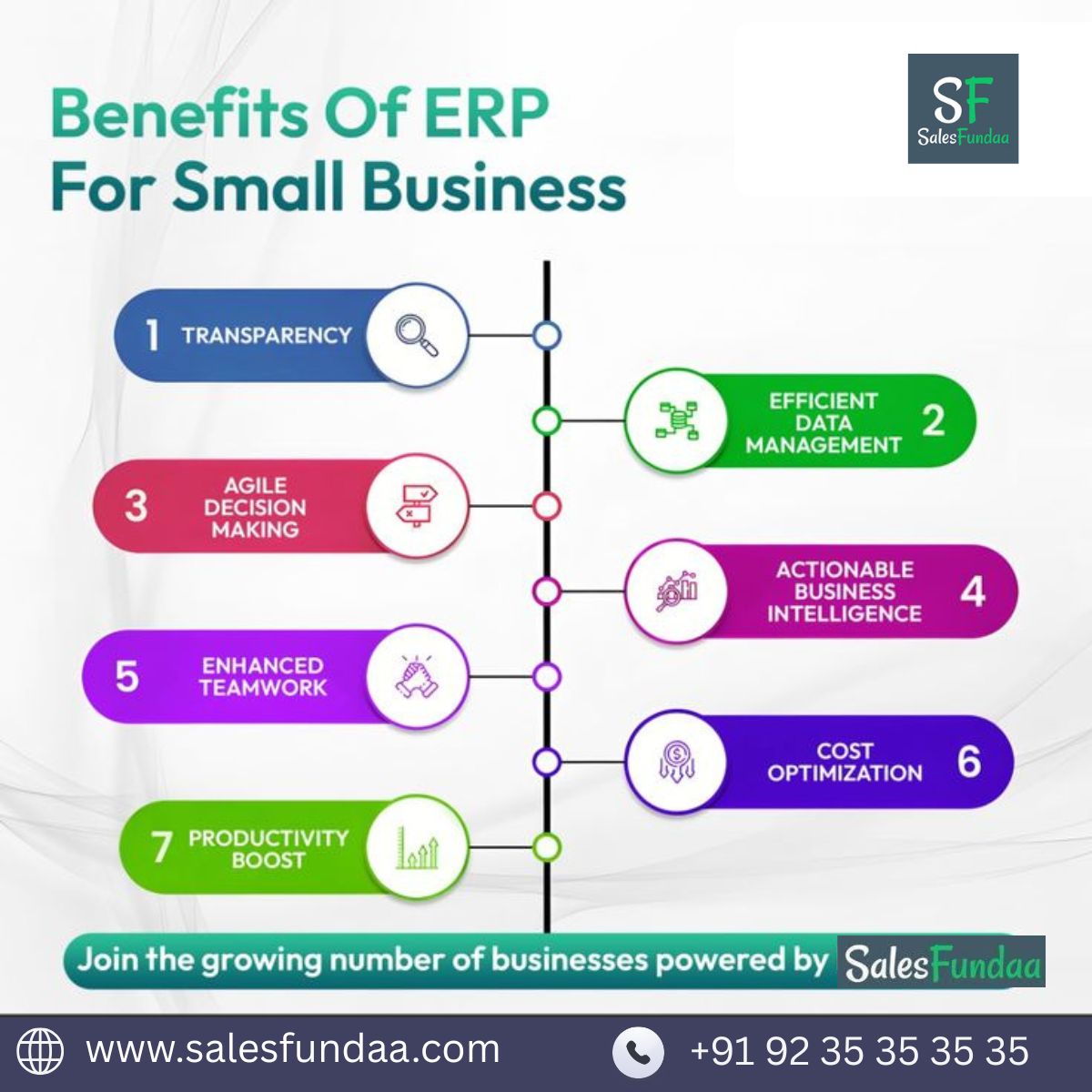
Here are 7 core benefits an ERP system brings to a growing small business:
1. Complete Transparency
When data is trapped in departmental silos, nobody has the full picture. An ERP centralizes your operations, providing cross-departmental visibility. Whether it’s tracking a customer order, checking inventory levels, or reviewing expenses, everyone on your team has access to the exact same, accurate data in real time.
2. Efficient Data Management
Say goodbye to duplicate data entry and human error. An ERP unifies your sales, finance, inventory, and HR data into a single, cohesive database, eliminating the need to manage five different software tools that don't communicate with each other. Clean data means clean operations.
3. Agile Decision Making
In a fast-paced market, waiting days for your team to compile weekly or monthly reports puts you at a disadvantage. An ERP gives you instant access to your business metrics. With live data at your fingertips, you can spot market shifts, identify bottlenecks, and make strategic decisions with absolute confidence.
4. Actionable Business Intelligence
Raw data is useless unless you can understand it. Modern ERP systems don't just store your data; they analyze it. Built-in reporting tools convert complex metrics into clear visual trends, helping you forecast demand, understand customer buying patterns, and pinpoint exactly where your business is losing money.
5. Enhanced Teamwork
When your departments use the same system, collaboration becomes effortless. The sales team can automatically trigger workflows for production, and production can instantly update inventory for customer service. An ERP breaks down communication barriers, keeping your entire workforce aligned.
6. Cost Optimization
Inefficiencies eat away at a small business's bottom line. By automating repetitive administrative tasks, reducing inventory holding costs, and eliminating manual errors, an ERP drastically reduces your operational expenses. It ensures you are maximizing your resources and cutting unnecessary overhead.
7. A Massive Productivity Boost
Your employees shouldn't be wasting hours copying data from one spreadsheet to another or hunting down lost emails. By automating routine workflows, an ERP frees up your team to focus on high-value tasks—like closing deals, improving product quality, and servicing customers.
Take the Next Step with SalesFundaa
An ERP is no longer a luxury—it is a strategic necessity for small businesses looking to compete and succeed.
Join the growing number of businesses powered by SalesFundaa ERP. Our platform: We tailor our platform to help you streamline your data, optimize your costs, and unlock your true productivity potential.