Running a manufacturing business in today’s fast-paced market is like trying to conduct an orchestra where half the musicians are playing from different sheet music.
You have raw materials arriving late, the production floor waiting on manual approvals, sales teams promising delivery dates they can’t guarantee, and warehouse managers pulling their hair out over inaccurate stock counts.
If your business relies on a patchwork of spreadsheets, disconnected software, and “gut feeling” decisions, you aren’t just losing time—you are losing profit.
To truly scale, you need a single source of truth. That is where a dedicated Manufacturing Enterprise Resource Planning (ERP) system comes in.
The Cost of Disconnected Operations
Many manufacturers hesitate to adopt an ERP because they fear the transition or the upfront cost. However, the cost of not upgrading is often much higher:
- Inaccurate Inventory: Carrying too much stock ties up valuable cash flow, while stockouts halt production lines and delay customer orders.
- Production Bottlenecks: Without real-time visibility, managers cannot identify which machine or process is slowing down the entire line.
- Siloed Data: When your warehouse doesn’t talk to your sales department, miscommunication is inevitable, leading to disgruntled customers.
3 Ways a Manufacturing ERP Transforms Your Business
A modern ERP system acts as the central nervous system of your factory. By integrating every department into one platform, it drives efficiency in three major areas:
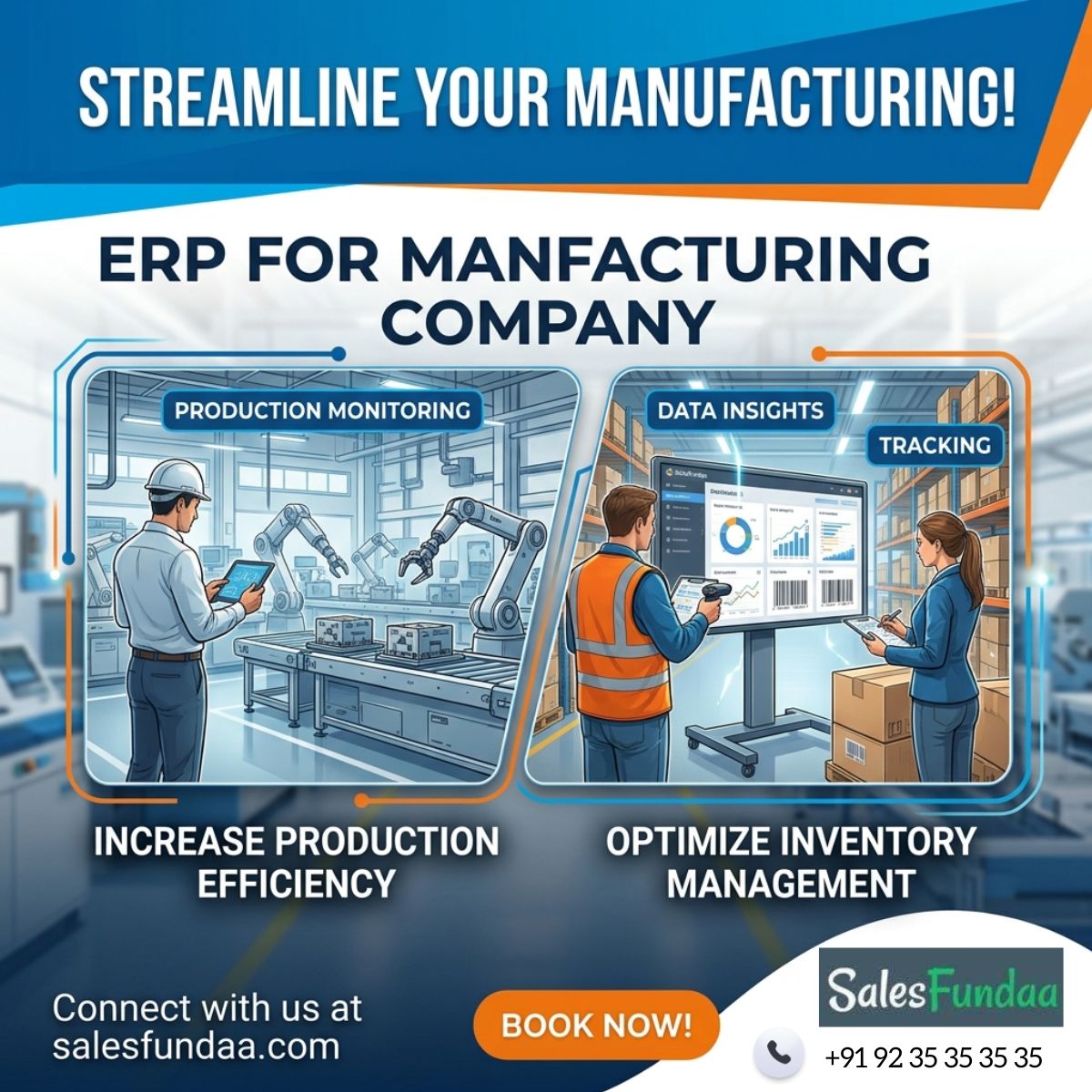
1. Real-Time Production Monitoring
You can’t fix what you can’t see. An ERP gives you live visibility into your factory floor.
- Track exactly where jobs are in the production cycle.
- Monitor machine uptime and schedule preventative maintenance before breakdowns occur.
- Instantly adjust schedules to accommodate urgent orders or unexpected delays.
2. Intelligent Data Insights
In manufacturing, data is your greatest asset—if you know how to read it. Instead of drowning in endless paperwork, an ERP consolidates your metrics into clean, actionable dashboards.
- Track your exact cost per unit.
- Identify which products yield the highest margins.
- Forecast future demand using historical data to buy raw materials at the best prices.
3. Optimized Inventory & Tracking
Never guess your stock levels again. An ERP automates your inventory management from the moment raw materials arrive to the second the finished product is shipped.
- Traceability: Instantly track batches, serial numbers, and lots for quality control.
- Just-In-Time (JIT) Inventory: Minimize storage costs by coordinating material arrivals perfectly with your production schedule.
- Auto-Reordering: Set minimum stock thresholds so your system automatically triggers purchase orders before you run out.
The Verdict: Stop Managing Chaos, Start Scaling
If you want to transition from a business that constantly fights fires to one that runs like a well-oiled machine, continuing to rely on outdated systems is no longer an option.
An ERP doesn’t just organize your data; it unlocks your factory’s true capacity, reduces waste, and directly boosts your bottom line.
Ready to Streamline Your Manufacturing?
At SalesFundaa, we build ERP solutions tailored to help manufacturers like you automate workflows, optimize inventory, and scale effortlessly.